Professor Kate McLoughlin
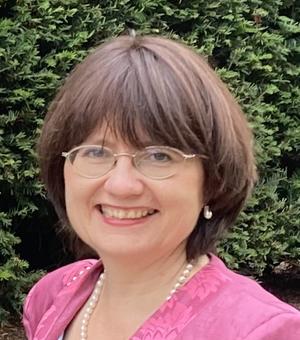
I am a transhistorical literary scholar, with particular research interests in English literature from 1760 to the present.
I have just completed Silence: A Literary History, funded by a Major Research Fellowship from the Leverhulme Trust. Over twelve centuries of English Literature, silence has had many guises and many hiding-places. My book guides readers on a tour taking in the silent states of exile on icy seas described in Anglo-Saxon poems, the hushed intimacy of medieval lullabies, exalted states of blissful union with the divine, the tongue-tied lovers of the Renaissance, spell-binding silent scenes in Shakespeare, encrypted expressions of same-sex love, reason-based reticence, the Romantic sublime, the surprising silences of the garrulous realist novel, the great epics of inarticulable grief, wordless communings with Nature, Modernist depictions of interiority, the failure of words in the face of two World Wars, experiments with visual and acoustic silences in contemporary prose, poetry and drama, and searches for silence in our own Age of Pings. In the process, I excavate the intellectual and cultural ideas behind silence and unpick how literary silences are formally created.
In tandem with this literary history, I have edited an anthology of poems about and evoking silence, Silence Please, which will come out with Bodleian Publishing in October 2026. From 2019 to 2022, with the historian Suzan Meryam Kalayci and the Ritblat Professor of Mindfulness and Psychological Science, Willem Kuyken, I convened the Silence Hub (SH), an inter-disciplinary, public-facing network for scholars interested in silence. In 2017, I held a Knowledge Exchange Fellowship at the Oxford Quaker Meeting, beginning to learn about silence, spirituality and poetry and in 2022 I brought the artist Tom Hammick to Oxford as a Fellow of the Cultural Programme: we made three videos about silence, art and opera that you can see on YouTube here, here and here.
My interest in silence arose from the my work on war writing. My third monograph, Veteran Poetics: British Literature in the Age of Mass Warfare, 1790-2015 (2018), reads the literary war veteran in the literary-philosophical contexts of the age of mass, industrialized warfare, illustrating how ex-combatants have been deployed by authors from William Wordsworth to J. K. Rowling to explore questions relating to being, knowing and communicating. What can be recovered from the past? Do people stay the same over time? Are there right times of life at which to do certain things? Is there value in experience? How can wisdom be shared? The final chapter looks at the figure of the silent war veteran - the former fighter who, against expectations, refuses or is unable to tell stories about the wars he has been in - and suggests that this expresses an epistemological crisis central to understanding post-Enlightenment modernity.
My previous publications include Authoring War: The Literary Representation of War from the Iliad to Iraq (2011), Martha Gellhorn: The War Writer in the Field and in the Text (2007) and, as co-editor and editor, The First World War: Literature, Culture, Modernity (2018), Writing War, Writing Lives (2017) and The Cambridge Companion to War Writing (2009). I am the editor of The Modernist Party (2013), which includes my own essay on why J. Alfred Prufrock is so afraid of going to a tea-party, and co-editor of Memory, Mourning, Landscape (2010) and Tove Jansson Rediscovered (2007). I am also the editor of British Literature in Transition: Flower Power, which includes an essay by me on light effects in Philip Larkin's poetry. My articles have appeared in journals such as Critical Inquiry, Essays in Criticism, Journal of Modern Literature and Textual Practice. I regularly review contemporary fiction for the Times Literary Supplement.
In 2017-18, I co-convened a Mellon-Sawyer international seminar series, Post-War: Commemoration, Reconstruction, Reconciliation from which arose On Commemoration: Global Reflections upon Commemorating War (2020). To foster scholarly collaboration and collegiality in the field of war representation, in 2010 I co-founded the War and Representation Network (WAR-Net), with Professor Gill Plain of the University of St. Andrews. WAR-Net now has over 250 members across six continents. With Gill, I am also co-General Editor of the monograph series Edinburgh Critical Studies in War & Culture. We welcome book proposals from scholars at all stages of their careers.
I am currently finishing a very short book, Ten Words Too Long, about garrulity (talking and writing too much), a subject that has close links with silence. Next, I am planning a cultural history of genius, investigating how the attribution, location and development of this concept was shaped by British and German writers and artists visiting Italy in the eighteenth and nineteenth centuries. These will include John Milton (as a prequel), Joseph Addison, Thomas Gray, Joshua Reynolds, Johann Joachim Winckelmann, Johann Wolfgang von Goethe, Percy Bysshe Shelley, Lord Byron, J. M. W. Turner, Thomas Carlyle (the only one not to visit Italy, but an important theoriser of genius nonetheless), John Ruskin, George Eliot, Walter Pater and Friedrich Nietzsche. My hypothesis is that the way in which genius developed over this period continues to be felt in the modern belief that we must make something of ourselves.
I am particularly interested in supervising dissertations on literature and silence, and am also open to proposals relating to any other area of my research.
- Prelims Papers 1B, 3 & 4
- FHS Papers 5, 6 & 7
- MSt and DPhil supervision in literature and silence, war writing, ideas of modernity.
I read English Language and Literature as an undergraduate at Somerville College, Oxford, and took an MPhil in Renaissance Literature at St. John's College, Cambridge. I then qualified as a barrister and worked for the Government Legal Service for seven years, with stints at the European Commission in Brussels, the Conseil d'Etat in Paris and the Office of the Parliamentary Counsel, before returning to Somerville for an MSt and then a DPhil which I completed in 19 months. I was then a Junior Research Fellow at Balliol College, Oxford, a Lecturer and Senior Lecturer at the University of Glasgow, and a Senior Lecturer and Reader at Birkbeck, University of London. In 2014, I became a Tutorial Fellow of Harris Manchester College. I have received Teaching Excellence Awards at both Birkbeck and Oxford. I'm also a published poet and an Associate of the Royal College of Music in piano performance. I love studying languages, am pretty competent in French and Italian and have also tackled (with varying degrees of success and no fluency) Arabic (modern standard), German, Greek (classical), Latin, Hebrew (biblical), Russian, Spanish and Yiddish.

